
The Strait of Hormuz is on fire. Oil is at $95 a barrel. The war with Iran has no end in sight. And your body is keeping score.
You may not be on the front lines. But your nervous system doesn’t know that.
Chronic stress — the kind that comes from watching an empire overextend itself in real time — is not a psychological problem. It is a physiological one. And if you don’t address it at the root, it will take years off your life faster than any war ever could.
The good news? The science of stress resilience is ancient. It predates the Mongol Empire. It predates Rome. And it works whether the world is stable or falling apart.
The Cortisol Crisis No One Is Talking About
When the news cycle is a 24/7 stream of war footage, economic warnings, and political chaos, your hypothalamic-pituitary-adrenal (HPA) axis doesn’t distinguish between a threat on your doorstep and a threat on your screen.
Your body produces cortisol either way.
Elevated cortisol — sustained over weeks and months — is not just “stress.” It is a cascade of measurable, destructive physiological events:
-
Immune suppression. Chronic cortisol exposure reduces lymphocyte production, making you more vulnerable to infections, autoimmune flare-ups, and even certain cancers.
-
Gut permeability. Cortisol degrades the tight junctions in your intestinal lining — the so-called “leaky gut” that drives systemic inflammation.
-
Cognitive decline. Sustained cortisol literally shrinks the hippocampus — the brain region responsible for memory and learning.
-
Metabolic disruption. Cortisol drives visceral fat accumulation, insulin resistance, and elevated blood sugar — the metabolic syndrome trifecta.
-
Cardiovascular damage. Chronic stress elevates blood pressure, increases arterial inflammation, and raises the risk of heart attack and stroke.
This is not speculation. This is decades of peer-reviewed endocrinology. And right now, with a war economy driving up the cost of food, fuel, and medicine, millions of Americans are marinating in cortisol without even realizing it.
The Adaptogens That Outlast Empires
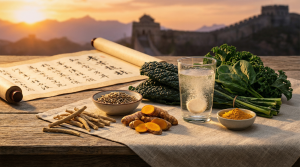
Eight hundred years ago, the Mongol Empire — the most dominant military force in history — collapsed not because of an outside enemy, but because it overextended itself and fractured from within.
The people who survived that collapse were not the ones who depended on the empire’s trade routes for their medicine. They were the ones who knew the plants growing in their own soil.
Adaptogens are a class of herbs that have been used for thousands of years — across Mongolian, Chinese, Ayurvedic, and Siberian traditions — to help the body resist the damaging effects of chronic stress. They work by modulating the HPA axis, the very system that cortisol hijacks.
Here are the four most evidence-backed adaptogens for stress resilience:
Ashwagandha (Withania somnifera)
The king of Ayurvedic adaptogens. A 2012 randomized controlled trial published in the Indian Journal of Psychological Medicine found that ashwagandha root extract reduced serum cortisol levels by 27.9% over 60 days compared to placebo. Participants also reported significant reductions in anxiety and insomnia.
Dosage: 300–600mg of standardized root extract (KSM-66 or Sensoril), taken daily.
Rhodiola Rosea
Used for centuries by Siberian and Mongolian herders to survive brutal winters and high-altitude stress. A 2012 systematic review in BMC Complementary and Alternative Medicine found that Rhodiola significantly reduced fatigue, improved cognitive function, and enhanced physical performance under stress.
Dosage: 200–400mg of standardized extract (3% rosavins, 1% salidroside), taken in the morning.
Holy Basil (Tulsi)
Sacred in Ayurvedic medicine. A 2017 systematic review in Evidence-Based Complementary and Alternative Medicine found that holy basil improved stress response, normalized blood glucose, and reduced anxiety across multiple human trials.
Dosage: 300–600mg of leaf extract, taken twice daily.
Eleuthero (Siberian Ginseng)
The original “adaptogen” — the term was literally coined to describe this plant. Used by Soviet athletes and cosmonauts. Research shows it enhances physical endurance, mental clarity, and immune function under chronic stress.
Dosage: 300–400mg of standardized extract, taken daily for 6–8 week cycles.
These are not supplements you take because a wellness influencer told you to. These are pharmacologically active compounds with millennia of traditional use and decades of clinical validation. They are the medicine that empires cannot confiscate.
The Vagus Nerve: Your Built-In Stress Reset
Adaptogens address the chemical side of stress. But your body also has a built-in electrical reset switch: the vagus nerve.
The vagus nerve is the longest cranial nerve in the body. It runs from your brainstem to your gut, touching nearly every major organ along the way. It is the primary conduit of the parasympathetic nervous system — the “rest and digest” counterbalance to the “fight or flight” sympathetic response.
When your vagal tone is high, your body recovers from stress faster, your heart rate variability (HRV) is higher, and your inflammatory markers are lower. When it is low, you are stuck in a chronic stress loop.
Three evidence-based practices to strengthen vagal tone:
1. Cold Exposure (30–90 seconds)
Cold water on the face or a cold shower activates the mammalian dive reflex, which stimulates the vagus nerve and rapidly shifts the nervous system into parasympathetic mode. A 2018 study in Medical Hypotheses found that regular cold exposure reduced sympathetic nervous system activation and improved mood.
Start with 30 seconds of cold water at the end of your shower. Build to 90 seconds over two weeks.
2. Slow Diaphragmatic Breathing (5 minutes)
Breathing at a rate of approximately 6 breaths per minute — 5 seconds in, 5 seconds out — maximizes respiratory sinus arrhythmia, the natural fluctuation in heart rate that reflects vagal tone. This is not meditation. This is applied physiology.
Practice for 5 minutes, twice daily. Morning and before bed.
3. Gargling and Humming
The vagus nerve innervates the muscles of the throat. Vigorous gargling with water or sustained humming (like an “om”) mechanically stimulates these muscles and, by extension, the vagus nerve itself.
Gargle vigorously for 30 seconds after brushing your teeth. Hum for 2–3 minutes during your breathing practice.
The Anti-Inflammatory Diet as a Shield
Chronic stress drives inflammation. Inflammation drives disease. The food you eat is either fueling the fire or putting it out.
When supply chains are under pressure — and a war that blocks 20% of the world’s oil supply will pressure every supply chain — the quality and availability of food changes. Prices rise. Processed food becomes the path of least resistance. And processed food is the single greatest driver of systemic inflammation in the modern diet.
The anti-inflammatory framework is simple:
Eliminate the accelerants:
– Seed oils (soybean, canola, corn, sunflower) — these are high in omega-6 fatty acids that drive inflammatory prostaglandin production
– Refined sugar — directly elevates inflammatory cytokines (IL-6, TNF-alpha)
– Ultra-processed foods — engineered to bypass satiety signals and deliver maximum inflammatory load
Build the foundation:
– Wild-caught fatty fish (salmon, sardines, mackerel) — omega-3 fatty acids (EPA/DHA) are the most potent dietary anti-inflammatories
– Dark leafy greens — rich in magnesium, folate, and polyphenols that modulate NF-kB, the master inflammatory switch
– Turmeric with black pepper — curcumin inhibits COX-2 and NF-kB; piperine increases bioavailability by 2,000%
– Fermented foods (sauerkraut, kimchi, kefir) — restore gut microbiome diversity, which directly regulates immune function
– Bone broth — provides glycine, proline, and glutamine that repair intestinal lining
The Mongol Empire’s collapse disrupted the Silk Road — the greatest trade network of the ancient world. Food supplies were severed. Medicine became scarce. The people who survived were the ones who knew how to nourish themselves from what was available locally. That principle has not changed in 800 years.
Sleep: The Non-Negotiable Foundation
Every system described above — cortisol regulation, vagal tone, inflammatory balance — depends on one thing: sleep.
And sleep is the first casualty of chronic stress. The war anxiety, the economic uncertainty, the doomscrolling at midnight — it all converges on your circadian rhythm like a wrecking ball.
The sleep sovereignty protocol:
-
Morning sunlight within 30 minutes of waking — sets the circadian clock via melanopsin receptors in the retina. 10 minutes minimum, no sunglasses.
-
No screens 90 minutes before bed — blue light suppresses melatonin production by up to 50%.
-
Magnesium glycinate (400mg) before bed — the most bioavailable form of magnesium; activates the parasympathetic nervous system and supports GABA production.
-
Tart cherry juice (8oz) in the evening — one of the few natural sources of dietary melatonin. A 2018 study in the American Journal of Therapeutics found it increased sleep time by an average of 84 minutes.
-
Keep the bedroom at 65–68°F — core body temperature must drop 2–3°F to initiate sleep. A warm room blocks this process.
The Sovereignty Principle
Here is the truth that no pharmaceutical company, no government health agency, and no insurance provider will ever tell you:
Your body is your most sovereign asset.
It cannot be debased like a currency. It cannot be overextended like an empire. It cannot be confiscated by a government or devalued by a central bank.
But it can be neglected. And neglect, in a time of chronic stress, is a form of slow surrender.
The Mongol Empire was the most powerful force on earth. It conquered everything from the Pacific to Eastern Europe. And then it destroyed itself — not through weakness, but through overextension.
Your body follows the same rules. Overextend it with chronic stress, poor nutrition, and sleep deprivation, and it will fracture just like any empire.
The difference is that you have the power to rebuild it. Starting today. Starting with the next meal, the next breath, the next night of sleep.
This is not wellness advice. This is survival strategy.
The Self Reliance Report documents the systems-level patterns. The Ready Report gives you the actionable steps. And American Downfall shows you the 800-year-old historical parallel that makes all of this urgent.
Build the fortress that no empire can breach. Build it in your own body.