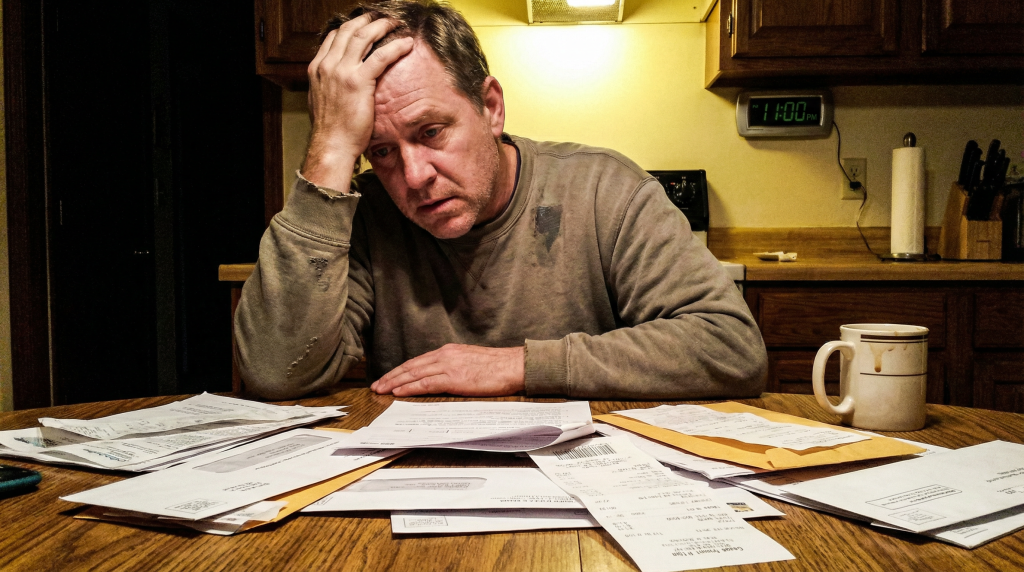
The headlines are focused on the numbers.
The new tariff regime is costing the average American household $600 to $700 this year.
The national debt just breached $39 trillion.
The New York Fed is warning of a 35% to 49% chance of a recession.
But there is a hidden cost to this economic contraction that no one is talking about.
It is happening inside your body.
When you are worried about the rising cost of groceries, the stability of your job, or the shrinking value of your savings, your body reacts.
It does not know the difference between a financial threat and a physical predator.
It just knows you are under attack.
And the first casualty of this constant, low-grade panic is your digestive system.
The modern world has created a unique kind of stress.
It is not the acute stress of running from a tiger.
It is the chronic, grinding stress of watching your purchasing power evaporate month after month.
This kind of stress is insidious.
It slowly erodes your resilience, starting from the inside out.
Your gut is often called your “second brain” for a reason.
It contains millions of neurons and produces the vast majority of your body’s serotonin.
When your primary brain is overwhelmed by economic anxiety, your second brain takes the hit.
The result is a cascade of physiological failures that leave you exhausted, bloated, and vulnerable to illness.
You cannot fight an economic war if your biological fortress is crumbling.
The stress of inflation and economic uncertainty is not just a mental burden.
It is a physical assault on your digestive tract.
Every time you check your bank account and feel that familiar knot in your stomach, you are experiencing a biological reaction.
Your body is preparing for a famine that may never come, but the damage is real.
The constant drip of cortisol is slowly dismantling your internal ecosystem.
You are being taxed twice: once by the government, and once by your own nervous system.

The Gut-Brain Axis Under Siege
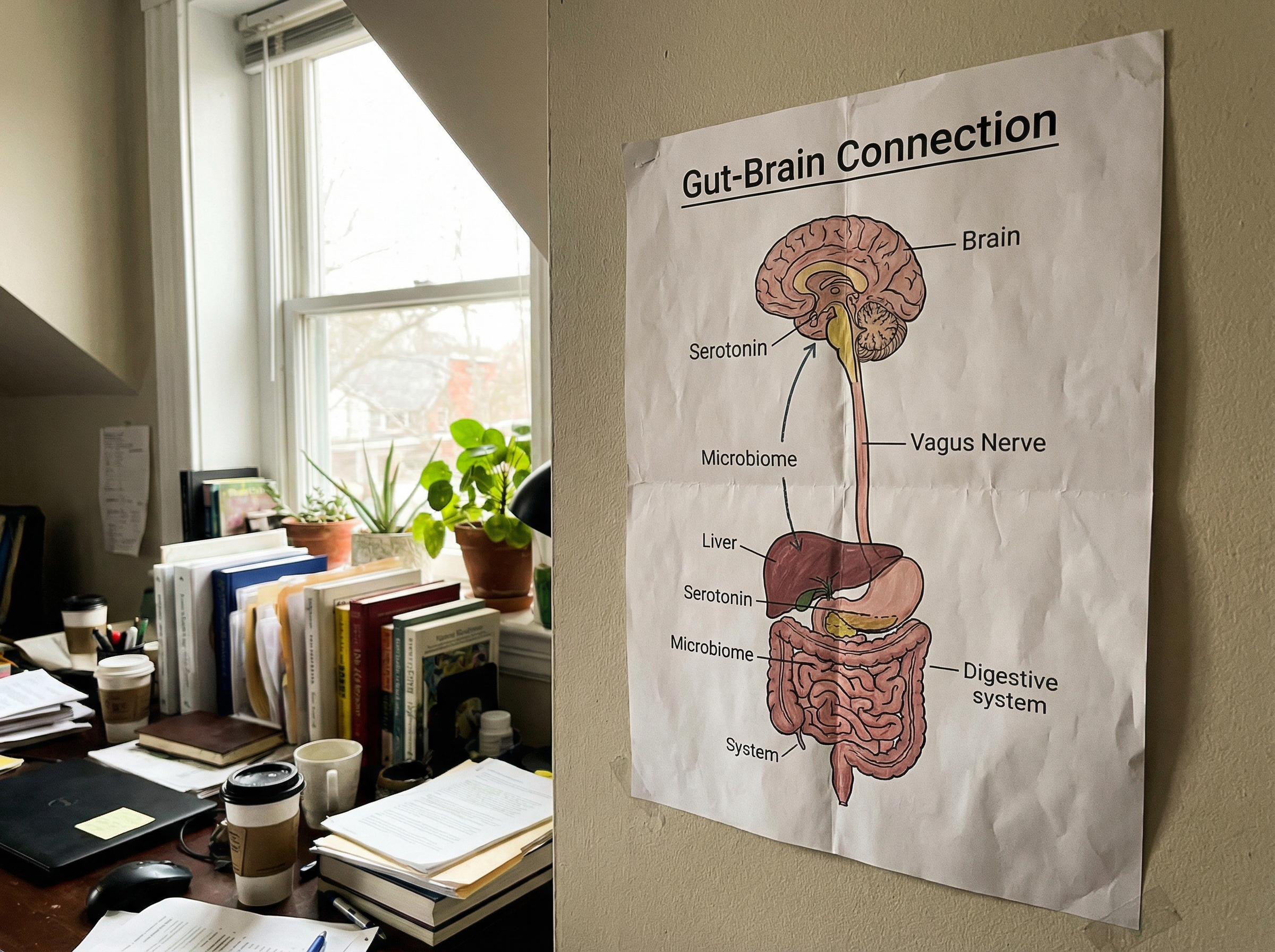
Your gut and your brain are connected by a superhighway called the vagus nerve.
This is the gut-brain axis.
When your brain perceives stress — like the anxiety of a looming recession — it floods your system with cortisol and adrenaline.
This is the “fight or flight” response.
In this state, your body diverts energy away from non-essential functions.
Digestion is considered non-essential when you are fighting for survival.
Blood flow to your stomach and intestines drops.
Stomach acid production slows down.
The delicate balance of your microbiome — the trillions of bacteria that keep you healthy — is thrown into chaos.
This is why financial stress often manifests as bloating, indigestion, or sudden changes in bowel habits.
Your gut is literally shutting down under the weight of economic anxiety.
But the damage does not stop there.
When digestion slows, food sits in your stomach longer.
It ferments. It produces gas. It creates an environment where harmful bacteria thrive.
This leads to inflammation, which damages the lining of your gut.
A damaged gut lining allows toxins and undigested food particles to leak into your bloodstream.
This is known as “leaky gut syndrome.”
Your immune system goes into overdrive, attacking these foreign invaders.
The result is systemic inflammation, which is the root cause of almost every chronic disease.
You are not just experiencing a stomach ache.
You are experiencing a systemic breakdown triggered by external economic pressure.
The tariffs and the inflation are not just draining your wallet.
They are draining your vitality.
The connection between your financial health and your physical health is undeniable.
When the economy contracts, your body’s ability to process nutrients contracts with it.
This is the physiological reality of living in a failing empire.
You cannot separate the health of the nation from the health of its citizens.
When the system is sick, the people get sick.
The Ming Dynasty Parallel: Spleen Qi and Economic Collapse
We have seen this pattern before.
During the Ming Dynasty, the empire enacted the Haijin, or Sea Ban.
They closed their ports and made foreign trade a capital offense.
The result was catastrophic.
The silver supply collapsed. Deflation destroyed the peasantry.
The economic stress on the average citizen was immense.
Traditional Chinese Medicine (TCM) practitioners of the era, like the legendary Li Shizhen, documented the physical toll of this societal collapse.
In TCM, the Spleen and Stomach are the center of digestion and energy production.
They are responsible for extracting Qi (vital energy) from food.
But chronic worry and overthinking — the exact emotions triggered by economic instability — directly damage Spleen Qi.
When Spleen Qi is deficient, digestion fails. Energy plummets. The body weakens.
The Ming peasants weren’t just starving from lack of food; they were starving because their bodies could no longer process the nutrients they did have.
Their internal trade routes had shut down, just like their empire’s ports.
The parallels to today are chilling.
We are building economic walls, just like the Ming Dynasty.
We are fracturing global supply chains in the name of protectionism.
And just like the Ming peasants, we are paying the price with our health.
The constant worry about the future is depleting our Spleen Qi.
We are eating, but we are not nourished.
We are resting, but we are not recovering.
Our internal energy reserves are being drained by the sheer effort of surviving in a contracting economy.
This is not a new phenomenon.
It is a historical pattern repeating itself in real time.
And if we do not learn from the past, we are doomed to suffer the same fate.
The Ming Dynasty’s collapse was not just an economic failure; it was a biological failure of its citizens.
When the state fails, the individual must become self-reliant.
This means taking control of your own health, starting with your digestion.
You must become the master of your own internal economy.
For a deeper look at how the Ming Dynasty’s economic isolation mirrors America’s current tariff regime, read the full analysis at American Downfall.
The Spleen Qi Restoration Protocol
You cannot control the tariffs.
You cannot control the national debt.
But you can control your internal environment.
To survive this economic contraction, you must restore your Spleen Qi and fortify your gut.
Here is the evidence-based protocol to rebuild your digestive sovereignty.
Always consult with a qualified healthcare professional before starting any new supplement protocol.
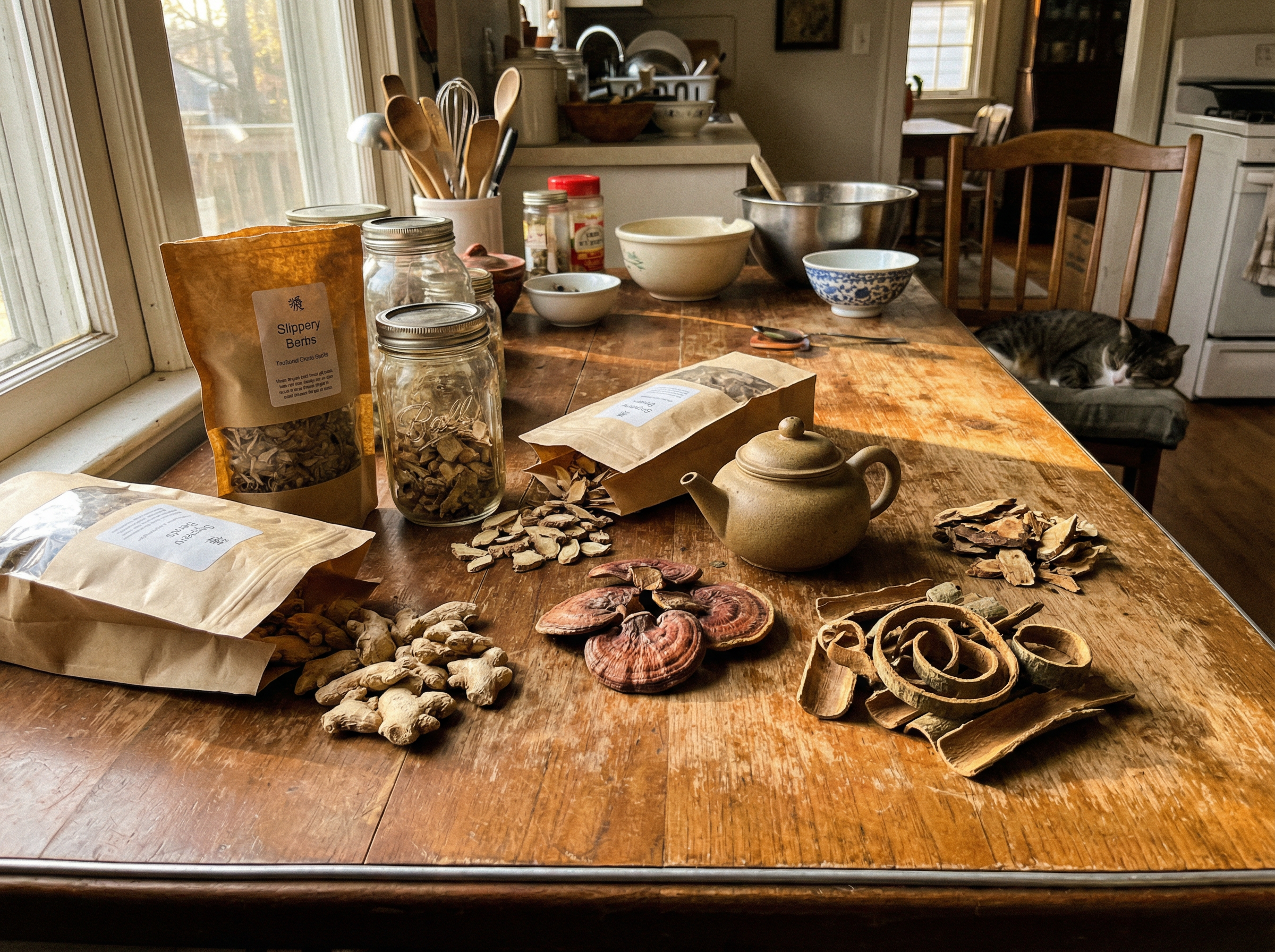
1. Slippery Elm Bark (Ulmus rubra)
This ancient remedy contains mucilage, a substance that becomes a slick gel when mixed with water.
It coats and soothes the lining of the stomach and intestines.
It acts as a physical barrier against inflammation and irritation.
Dosage: 1 tablespoon of powdered bark mixed with water, up to 3 times daily.
2. Deglycyrrhizinated Licorice (DGL)
Licorice root has been used in TCM for centuries to harmonize the digestive system.
DGL is a safer form that removes the compound that can raise blood pressure.
It promotes mucus cell regeneration in the gut lining.
It helps heal the damage caused by stress-induced inflammation.
Dosage: 380-400 mg chewable tablet, 20 minutes before meals.
3. Reishi Mushroom (Ganoderma lucidum)
Known as the “Mushroom of Immortality,” Reishi is a powerful adaptogen.
It helps regulate the gut-brain axis, calming the nervous system while supporting the microbiome.
It is one of the most effective herbs for restoring depleted Qi.
Dosage: 1.5 to 5 grams of dried extract daily.
4. Ginger Root (Zingiber officinale)
Ginger is a warming herb that stimulates digestion and improves circulation.
In TCM, it is used to warm the Spleen and Stomach, counteracting the cold, stagnant energy caused by stress.
It helps move food through the digestive tract, preventing fermentation and bloating.
Dosage: 1-2 grams of fresh or powdered ginger daily, often consumed as a tea.
5. Mindful Eating Practices
You cannot restore Spleen Qi if you are eating in a state of panic.
Your body must be in a parasympathetic (“rest and digest”) state to properly process food.
Take three deep breaths before every meal.
Chew your food thoroughly.
Do not watch the news or discuss finances while eating.
Protect your mealtime as a sacred space for nourishment.
For more strategies on building household resilience in the face of economic uncertainty, visit Self Reliance Report.

Building Your Internal Fortress
The Ming Dynasty built a wall and starved.
They tried to protect themselves by shutting out the world, but they only destroyed their own foundation.
Do not make the same mistake with your body.
When the external world is chaotic, your internal world must be resilient.
Your body is the last fortress you truly control.
By protecting your gut health and restoring your vital energy, you are building a biological shield against the stress of the modern world.
You are reclaiming your sovereignty.
You are refusing to let the economic contraction dictate your physical well-being.
This is the ultimate act of defiance.
To thrive when the system expects you to fail.
To remain strong when the world is falling apart.
This is what it means to be truly sovereign.
The world outside may be unpredictable, but your internal ecosystem can remain a sanctuary of health and vitality.
Take control of your digestion.
Protect your Spleen Qi.
Fortify your gut-brain axis.
Because when the economic storm hits, the strongest fortress is the one you build inside yourself.
Do not wait for the government to fix the economy.
Do not wait for the supply chains to heal.
Start building your internal resilience today.
Your health is your most valuable asset, and it is the one thing they cannot tax.
For actionable preparedness steps to protect your household before the next economic shock, visit The Ready Report.
Disclaimer: The information provided in this article is for educational purposes only and is not intended as medical advice. Always consult with a qualified healthcare professional before starting any new supplement or treatment protocol.