
Seven Holistics · DAILY INSTALL

OCTOBER 23, 2026 · ILLUSTRATIVE EDITORIAL COLLAGE
You sat down to check one thing. Somehow, the whole next hour went with it.
Before you make a big exercise plan, give that long stretch of sitting one small break.
SPONSORED · Meridian Health Protocol

You sat down. Your shoulders stayed at work.
The chores are done, but you are still holding the day in your neck and shoulders.
This hands-only routine begins with a few specific points on your own body. Which spots come first—and how does the routine fit together?
Today’s Install: The Chair-Break Cue
Time: 15 minutes. Cost: Use what you have. Keep: One dated check, photo or household note.
One regular cue is paired with a comfortable movement break, and the first trial is marked.
For your binder: Print this issue or keep the dated note with your household plans.
Action Brief
Read the signal: Cooler days can move more of the day indoors. The next weekend movie, family visit or desk session can pass without much movement.
See the pattern: A good intention gets easier to use when it has a clear cue.
Make the move: One regular cue is paired with a comfortable movement break, and the first trial is marked.
The Current Signal
Cooler days can move more of the day indoors. The next weekend movie, family visit or desk session can pass without much movement.
Federal activity guidance says to move more and sit less. Some activity is better than none. Today, attach a brief, comfortable movement break to something you already notice. The goal is to make a start you can repeat.
The golden nugget: A good intention gets easier to use when it has a clear cue.
QUICK SPONSOR · 4Patriots
When the store trip falls through, what is for dinner?
The fridge is nearly empty. The family is not. A shelf-stable meal supply gives you another place to turn. Which meals would you want waiting? Keep water and the safe cooking setup the meals need ready, too.
America, 1963: Fitness Became a Public Challenge

Illustrated historical reconstruction; not an archival photograph.
In 1963, a fitness challenge swept far beyond a gym. President John F. Kennedy drew attention to an old military test: walking fifty miles.
The challenge caught the public imagination. A surviving cartoon in the Kennedy Library collection shows how closely fitness became tied to the president's public image. A government history of the fitness council records the White House hiking challenge.
Fifty miles made a striking headline. It gave people something easy to picture and hard to ignore. It also sat at the extreme end of what most households would consider an ordinary walk.
That contrast matters. A challenge can make a problem visible without being the right starting point for every person who sees it.
Imagine someone reading the newspaper at the breakfast table. The story makes movement feel important. But that reader still needs to decide what fits their own body, time and day. That breakfast scene is illustrative, not a documented individual's account.
Kennedy's wider fitness push included public messages, schools and organized activity. The famous hike was one part of a much larger effort to get Americans thinking about how they moved.
We do not need to turn the spectacle into a prescription. A long hike is not today's task. Neither is proving that you can keep pace with anyone else.
The useful part is the move from a vague wish to a visible action. What will remind you? Where can you move comfortably? What will count as doing it?
Today, choose a cue that already happens. The end of a chapter, a work timer or the start of a TV break can become a prompt. Keep the first response small enough to do without turning the day into a contest.
Pompeii: The Work Was in the Movement

Illustrated reconstruction; not an archaeological photograph.
In Pompeii, movement was often built into the work itself. A fullery cleaned and finished cloth using a series of tubs and basins.
The archaeological park's guide describes workers treading fabrics in liquid. The fullery known as that of Stephanus still preserves parts of a workshop placed inside a former house.
Picture a worker stepping in a small vat, with hands braced on the sides. Cloth moves underfoot. Nearby basins hold other stages of the job. This is a reconstruction of a working process, not a portrait of a known person.
The scene is a reminder that ordinary movement once served many tasks that machines now do. Feet, arms and repeated effort were part of getting cloth ready for use.
It is also a harsh workplace story. Much of the labor was done by enslaved people. Long hours of demanding work are not a model for modern health, and hardship should not be dressed up as a wellness routine.
What survives is a clear link between a task and the movement needed to perform it. The worker did not need an app to explain why they were on their feet. The job supplied the reason.
Many of our daily tasks no longer do that. Reading, shopping, talking and watching can all happen from the same chair. That makes it easy for a seated task to lead straight into the next one.
A household cue can put a small bit of movement back between those tasks. It need not imitate ancient labor or compete with a modern workout.
The comparison is about the shape of a day: when movement has a place in the routine, it is less dependent on remembering a separate plan.
The Pattern to Notice
Across BOTH examples, the pattern is this: a good intention gets easier to use when it has a clear cue.
The Household Lesson
Choose movement that fits your usual abilities: a short easy walk, a comfortable change of position, or clinician-approved seated movement.
Keep the route clear and use your normal support. Do not push through dizziness, chest pain or unusual shortness of breath. People with activity restrictions should use their care team's plan.
Your Household Install

Illustrative household example. Use the steps below for your own setup.
Choose one cue. Pick a timer, chapter ending or other event you will notice during a long seated task.
Choose a small response. Plan one or two comfortable minutes of movement that fit your abilities. This is a beginning, not a complete activity target.
Try it once. Use a clear, well-lit space and your usual support. Keep the effort easy.
Write the pairing. Put CUE ___ / MOVEMENT ___ on a note where you sit. Mark the first completed break.
Measurable win: One regular cue is paired with a comfortable movement break, and the first trial is marked.
Status Check
□ My movement cue is written down.
□ The movement fits my abilities and the route is clear.
□ I have tried and marked the first break.
Tool That Fits Today’s Pattern
Your keep-it card: My cue ___ / My comfortable movement ___ / First break completed ___
The Takeaway
A good intention gets easier to use when it has a clear cue.
Stay steady,
Nick Anderson
One useful step. A more capable home.
P.S. What keeps you in the chair longest: work, TV or scrolling? Hit reply. Share this with someone who would like a small place to start.
P.P.S. Two useful next reads from the Household Resilience Network:
SPONSORED · 4 FOOT FARM BLUEPRINT
Better food. Less to buy again.
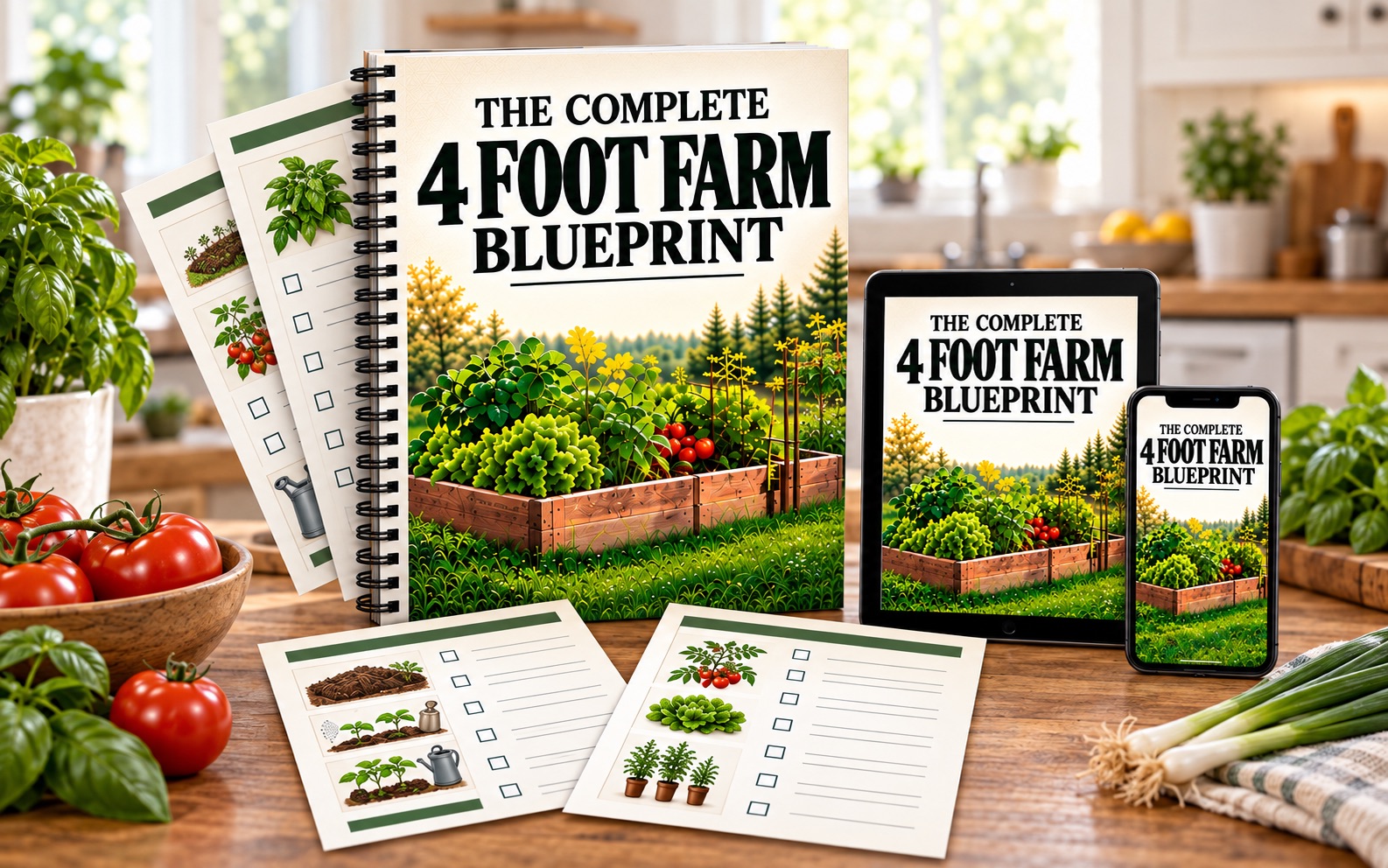
The same lettuce. The same herbs. Another trip to buy them again. What if a small spot at home supplied some of those repeat buys?
The COMPLETE Blueprint from our friends at 4 Foot Farm shows the steps in pictures. Start with one food you already eat, using a container, patio or indoor setup with a simple grow light.
See the first setup—and how to keep more fresh food coming without taking on a whole yard.
Sources reviewed for this issue: HHS, Physical Activity Guidelines for Americans, second edition; Kennedy Presidential Library, Survival of the Fittest cartoon; HHS, President’s Council on Physical Fitness history; Pompeii Archaeological Park, excavation guide, Fullonica of Stephanus. Seasonal indoor-routine edition, October 23, 2026. Historical scenes are illustrated reconstructions.